
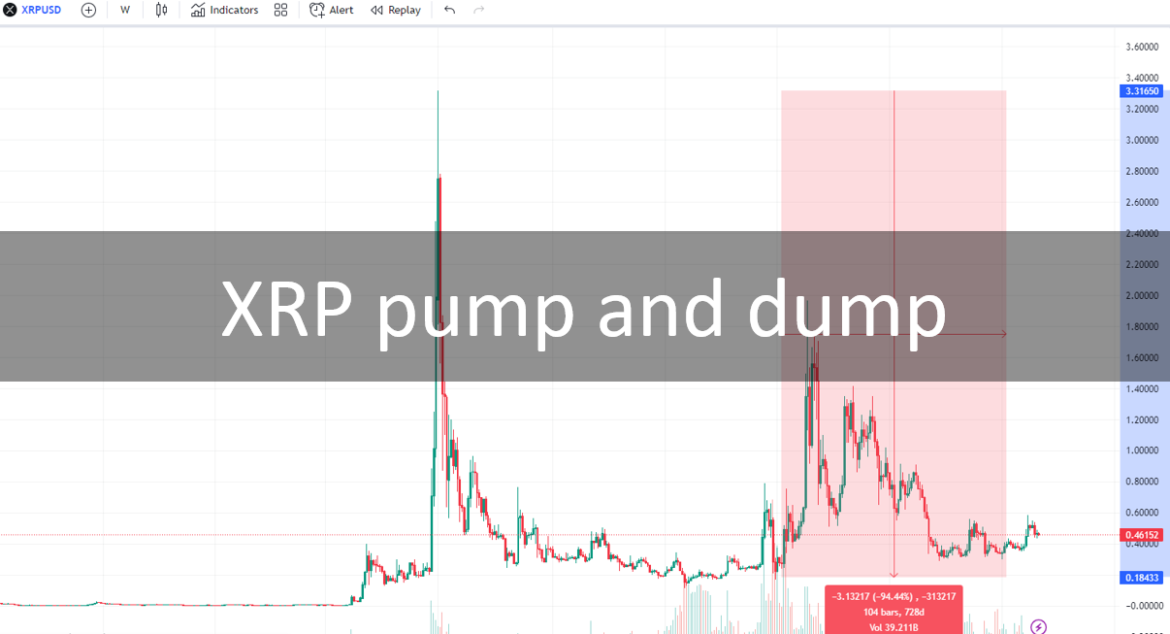
Ripple (XRP) is a cryptocurrency that gained significant attention in the cryptocurrency market due to its focus on providing faster and more efficient cross-border payments. However, like many cryptocurrencies, XRP has experienced significant price volatility and pump and dump cycles. In this article, we will explore the reasons behind XRP’s pump and dump.
What is Ripple?
Ripple is both a cryptocurrency and a payment protocol designed to facilitate cross-border payments. Unlike Bitcoin and many other cryptocurrencies, which rely on a decentralized network of users to validate transactions, Ripple’s protocol uses a network of trusted nodes to validate transactions. This allows Ripple to process transactions more quickly and efficiently than many other cryptocurrencies.
Reasons for Ripple’s Pump
- Partnerships with Financial Institutions
One of the primary drivers of Ripple’s price pump was its partnerships with financial institutions. Ripple worked with a number of banks and payment providers to integrate its payment protocol into their existing infrastructure, which helped to legitimize Ripple’s technology and create a sense of credibility around the platform. - Focus on Cross-Border Payments
Another factor that contributed to Ripple’s pump was its focus on cross-border payments. The traditional process for sending money across borders can be slow, expensive, and prone to errors. Ripple’s payment protocol promised to streamline this process and make it faster, cheaper, and more efficient, which was appealing to many investors. - Limited Supply
Unlike many cryptocurrencies, which have a fixed supply, Ripple’s total supply was set at 100 billion XRP, with 55 billion XRP held in escrow by Ripple Labs. This limited supply helped to create a sense of scarcity around XRP, which drove up its price.
Reasons for Ripple’s Dump
- Regulatory Concerns
One of the primary reasons for Ripple’s price drop was regulatory concerns. In 2020, the U.S. Securities and Exchange Commission (SEC) filed a lawsuit against Ripple, claiming that XRP was an unregistered security and that Ripple had raised over $1.3 billion through the sale of XRP tokens. This lawsuit created uncertainty around the future of XRP and led to a significant drop in its price. - Delisting from Exchanges
Following the SEC lawsuit, a number of exchanges began delisting XRP from their platforms. This made it harder for investors to buy and sell XRP, which contributed to a further drop in its price. - Lack of Adoption
Despite its partnerships with financial institutions and focus on cross-border payments, Ripple has struggled to gain widespread adoption. Many banks and payment providers have been hesitant to adopt Ripple’s payment protocol, citing concerns about regulatory compliance and the use of XRP as a currency.
Moving forward, the long-term potential of Ripple remains uncertain. While its payment protocol has the potential to revolutionize cross-border payments, the regulatory environment and lack of adoption remain significant challenges. Additionally, the ongoing SEC lawsuit could impact the future of XRP and its price.
Ripple’s pump and dump can be attributed to a combination of factors, including its partnerships with financial institutions, focus on cross-border payments, and limited supply. However, regulatory concerns, delisting from exchanges, and lack of adoption have contributed to its price drops and remain significant challenges for the platform. As with any investment, it is important for investors to carefully consider the risks and potential rewards before investing in Ripple or any other cryptocurrency.